
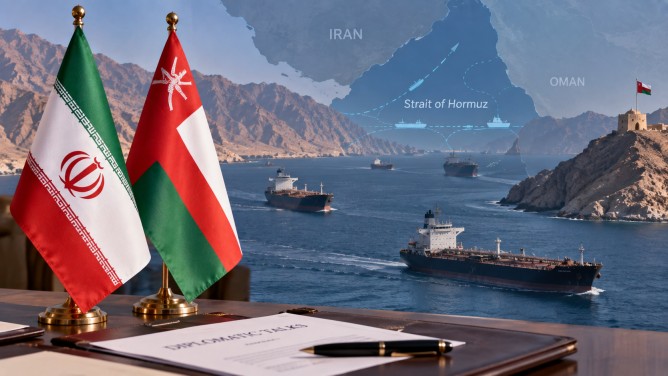
A crucial meeting originally set to address new shipping protocols through the Strait of Hormuz, involving Iran, Oman, and other Gulf nations, has been postponed indefinitely. The gathering, which was to be held in Muscat, was slated to focus on regional security and a joint Iran-Oman proposal for managing commercial traffic through this vital maritime corridor. Oman’s Foreign Minister Badr Albusaidi cited the need for consensus as the reason for the delay. Iran confirmed the postponement, noting it was a mutual decision with Oman after several regional countries requested the rescheduling.
The talks were halted following an incident involving an Iranian commercial vessel near Qeshm Island, where a reported attack resulted in one fatality and injuries to four crew members. Iranian state media detailed that the vessel was hit by a projectile while passing through the Strait, leading to a fire and the subsequent evacuation of its crew. This incident underscores the ongoing tensions and risks in the region, affecting one of the world’s most crucial oil shipment routes.
Previously, Iran and Oman had explored alternative shipping routes that suggested vessels entering the Persian Gulf would navigate through Iranian waters, while those exiting would have the option of passing through both Iranian and Omani waters. However, Iran maintains that any reopening of the Strait of Hormuz to international shipping hinges on specific conditions being met. Additionally, Iranian authorities have suggested that fees could be imposed on vessels utilizing these proposed routes, a move that could further complicate negotiations.
The current disruption has significantly reduced commercial traffic through the Strait, raising concerns over its implications for global energy markets. Meanwhile, Saudi Arabia has reportedly expressed the need for revisions to the Iran-Oman proposal, and Bahrain has opted out of the postponed meeting altogether. The tension in the Strait of Hormuz, coupled with Saudi Arabia’s ongoing shutdown of its 1,200-kilometer East-West oil pipeline due to previous drone attacks, is adding pressure on oil supplies. This pipeline closure limits alternative routes for crude oil transport to the Red Sea, exacerbating the situation.
As diplomatic strains in the Gulf persist, the uncertainty surrounding the Strait of Hormuz continues to affect oil markets, with Brent crude prices surpassing $100 a barrel. The potential for a protracted pipeline closure poses a risk to a substantial portion of global oil supplies, further escalating concerns over energy security amid the region’s heightened tensions.