
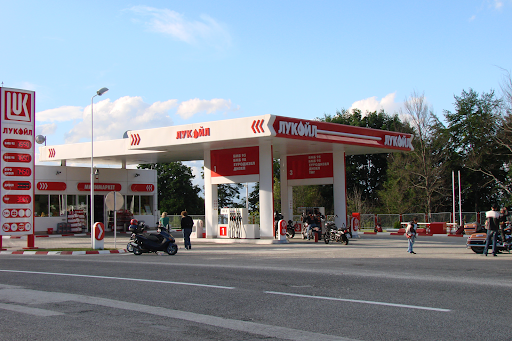
In a demonstration of significantly expanded military reach, the General Staff of the Armed Forces of Ukraine has confirmed a successful long-range operation in which Ukraine strikes Russian oil platforms situated in the waters of the Caspian Sea. During a coordinated nighttime raid, three specific drilling platforms—V. Filanovsky, Yuri Korchagin, and Valery Grayfe—sustained direct hits, marking a critical escalation in Kyiv’s strategy to dismantle the economic engine powering the Kremlin’s war machine. These facilities are owned and operated by the Russian energy giant Lukoil and serve as vital nodes in the country’s petroleum extraction network. By targeting infrastructure in the Caspian Sea, which is geographically removed from the immediate front lines, Ukraine is signaling that no corner of Russia’s economic territory is safe from precision strikes, aiming to choke off the petrodollars that are essential for Moscow to continue funding its invasion and military operations.
The sustained nature of this campaign is evident, as this is not the first time these specific assets have come under fire; reports indicate that the V. Filanovsky, Yuri Korchagin, and Valery Grayfe platforms were targeted multiple times throughout the month of December. The General Staff’s report of “direct hits” implies that the latest operation achieved a level of accuracy that could result in significant operational downtime or structural damage, although a comprehensive assessment of the destruction is still underway. Lukoil, the corporate owner of these assets, has maintained silence regarding the incident, having not responded to requests for comment made outside of regular business hours. This silence adds a layer of uncertainty regarding the potential impact on Russia’s oil output levels and highlights the sensitivity of attacks on the nation’s primary revenue-generating sector.
While the maritime domain sees an intensification of hostilities, Ukrainian forces continue to score tactical victories on land, specifically targeting high-value military hardware in occupied territories. In a separate and successful mission in the Luhansk region of eastern Ukraine, Kyiv’s forces located and destroyed a Buk-M3 medium-range air defense missile launcher. This system is a cornerstone of Russia’s anti-aircraft capabilities, designed to protect ground troops and infrastructure from aerial threats. Preliminary reports from the field describe multiple hits followed by a series of explosions, indicating the complete neutralization of the launcher. Removing such sophisticated air defense systems is a strategic priority for Ukraine, as it degrades the protective umbrella over Russian occupation forces and creates openings for future aerial operations.
Simultaneously, the war on logistics continues to grind down Russian capabilities in the south. Another targeted strike was launched against a material and technical support warehouse in the Kherson region. These logistical hubs are essential for the maintenance and supply of frontline troops, storing everything from ammunition to spare parts. by destroying these warehouses, Ukraine aims to disrupt the flow of resources, thereby reducing the combat effectiveness of Russian units and complicating their ability to sustain offensive or defensive maneuvers. This multi-pronged approach—hitting oil revenue sources, air defense systems, and logistical supply lines—demonstrates a comprehensive strategy of attrition designed to erode Russia’s ability to wage war on multiple levels.
The conflict’s toll on civilian life and infrastructure within Russia itself was brought into sharp focus by events in Voronezh. Local officials in this southwestern Russian city reported a massive drone incursion overnight, resulting in one fatality and injuries to at least four others. Governor Alexander Gusev stated that air defense units managed to neutralize 17 unmanned aerial vehicles (UAVs) in what he characterized as one of the largest drone attacks on the city since the commencement of the war. This incident underscores the reciprocal nature of the current phase of the conflict, where Ukrainian drone capabilities are increasingly being used to strike deep into Russian territory, challenging the Kremlin’s ability to protect its own population while it continues its aggression abroad.
Asymmetric Warfare Reach Expands as Ukraine Strikes Russian Oil Platforms Deep in the Caspian Sea
Picture Credit: www.commons.wikimedia.org
19