
As darkness falls on December 21st, Penzance transforms into a scene of controlled chaos and revelry. The Montol festival, though dating only to 2007, revives ancient Cornish traditions of midwinter celebration. Thousands gather wearing elaborate masks—animal faces, foliate heads, veils concealing identity—while musicians play traditional tunes on pipe, drum, and fiddle. This is Cornwall’s distinctive way of honoring winter solstice, blending prehistoric themes with folk customs that persisted through centuries.
The festival’s centerpiece involves ritual sun burning. A papier-mache sun is set ablaze while costumed revelers dance triumphantly around the flames. This symbolic act acknowledges winter solstice’s astronomical significance—the moment when darkness reaches its maximum before the sun reverses course. Fire has always held special meaning during winter’s depths, representing warmth, light, and hope for eventual spring.
Guise dancing forms another essential element of Montol celebrations. This old Cornish custom involves elaborate disguises that allow participants to adopt temporary identities. Hobby horses including those named Penglaz and Pen Hood parade through streets alongside dragons and fire dancers. The atmosphere encourages mischief and taboo-breaking—what filmmaker Christopher Morris calls “a wild night of misrule.”
The festivities culminate at 9:30 PM with a torch-lit procession. Participants carrying flaming torches parade the Mock (Yule log) down Chapel Street toward the sea. This journey from town to water echoes ancient themes about boundaries and transitions, with the winter solstice representing a threshold moment in the annual cycle.
These modern celebrations maintain connections to the prehistoric monuments scattered across West Cornwall’s landscape. Throughout the day, people visit stone circles, holy wells, hill forts, and ancient beacons, witnessing astronomical alignments their ancestors observed four thousand years ago. Carolyn Kennett leads guided walks to sites like Chûn Quoit where participants can see the winter solstice sun setting over Carn Kenidjack. This combination of ancient monuments, scholarly understanding, and vibrant community celebration makes Cornwall uniquely powerful for experiencing winter solstice’s astronomical, cultural, and spiritual dimensions.
Torch-Lit Processions and Burning Suns: How Cornwall Celebrates Midwinter
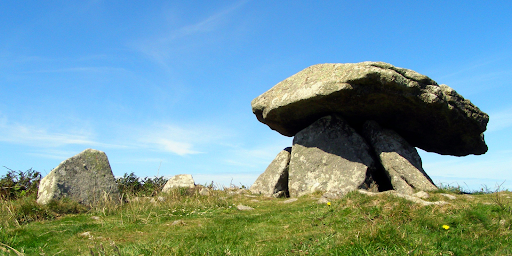
Photo by Jim Champion (treehouse1977), via wikimedia common
26