
The Mercedes-Benz CLA’s rollout schedule provides concrete timelines for when consumers can experience reasoning-enabled autonomous vehicles. The phased launch across the United States, Europe, and Asia over the coming months transforms Alpamayo from announcement to available product.
The United States launch comes first, reflecting both the country’s relatively permissive regulatory environment for autonomous vehicle testing and its important market for automotive technology. American consumers have historically shown willingness to adopt new automotive technologies, making it a logical initial market for breakthrough innovations like reasoning AI.
European markets follow the US launch, bringing the technology to Mercedes-Benz’s home region. European automotive regulations are comprehensive and demanding, so the vehicle’s approval for European sale represents validation of its safety and reliability. The European market also represents sophisticated consumers with high expectations for both luxury features and technological capabilities.
Asian market entry completes the global rollout, bringing the technology to regions that include both dense urban environments and rapidly growing automotive markets. Countries like China and Japan present unique challenges and opportunities for autonomous vehicles—complex traffic patterns and high population densities create demanding testing grounds, while significant investment in transportation infrastructure and technology adoption create favorable conditions for deployment.
This global launch strategy allows Mercedes-Benz and Nvidia to gather performance data across diverse driving environments, traffic patterns, and regulatory frameworks. The insights from multi-market deployment will inform ongoing development and refinement of the reasoning systems. The rollout coincides with production of Nvidia’s Vera Rubin chips, which provide the computational power these vehicles require. As this technology enters markets worldwide, it will provide the first large-scale test of whether reasoning AI truly enables safer, more reliable autonomous driving. Nvidia’s strategy combines this application showcase with hardware leadership to maintain its dominant position despite growing competition from traditional semiconductor companies and technology firms developing their own specialized AI processors.
Launch Timeline Confirmed for First AI Reasoning Vehicle Across Three Continents
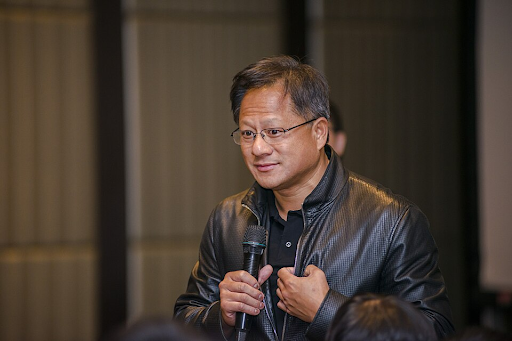
Photo by NVIDIA Taiwan, wikimedia commons
44