
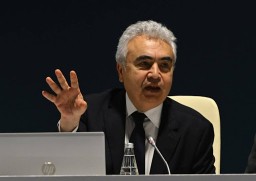
The Iran war has created what the head of the International Energy Agency describes as perfect conditions for a prolonged global energy emergency — a rare and alarming convergence of large supply losses, extensive infrastructure damage, blocked transit routes, and failed international communication. Fatih Birol, speaking in Canberra, said the combination of factors driving the crisis made it uniquely resistant to quick resolution. He described the overall emergency as equivalent to the combined force of the 1970s twin oil shocks and the Ukraine gas disruption.
Birol explained that in a typical energy supply disruption, one or two of these factors would be present but others would help cushion the impact. The Iran crisis was exceptional in that all of them were operating simultaneously. At least 40 Gulf energy assets were severely damaged, the Hormuz strait was closed, gas supplies were severely disrupted, and the initial response by world leaders had been delayed by a failure to appreciate the crisis’s scale. These factors compounded each other in ways that made the emergency extraordinarily difficult to manage.
The conflict began February 28 with US and Israeli strikes on Iran and has since removed 11 million barrels of oil per day and 140 billion cubic metres of gas from world markets. These losses are more than double those of the combined 1970s oil crises and exceed the gas losses of the Ukraine conflict. The IEA deployed 400 million barrels from strategic reserves on March 11 — the largest emergency action in its history.
Birol confirmed further releases were under consideration and said consultations with governments across three continents were ongoing. He called for demand-side policies including remote work, lower speed limits, and reduced air travel. He met with Australian Prime Minister Anthony Albanese and said the conditions for a prolonged crisis required long-term planning, not just short-term emergency management.
Trump’s 48-hour ultimatum to Iran to reopen the strait expired without result, and Tehran threatened retaliatory strikes on US and allied energy and water infrastructure. Birol concluded that governments needed to begin planning explicitly for scenarios in which the crisis extended well beyond current expectations. He said the conditions that made the crisis uniquely severe were not going to resolve themselves quickly, and the international response needed to be calibrated accordingly.