
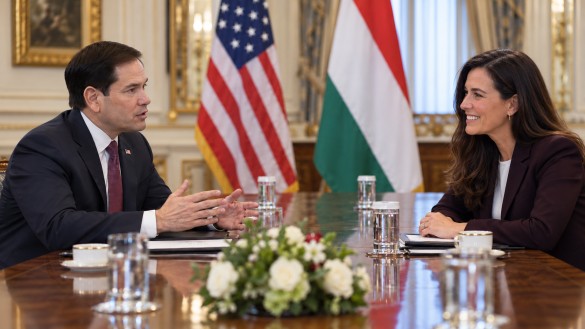
Hungary and the United States have signed significant agreements to enhance energy cooperation and law enforcement collaboration during a meeting between Hungarian Foreign Minister Anita Orbán and US Secretary of State Marco Rubio in Washington. The discussions, which took place on Thursday after a delay earlier in the week, covered various topics including regional energy infrastructure, natural gas supplies, nuclear cooperation, and intelligence sharing.
The energy agreement focuses on strengthening regional natural gas and oil infrastructure through the US-backed Trump Peace Pipelines Framework. This initiative aims to bolster American liquefied natural gas (LNG) exports while developing energy infrastructure across Central and Eastern Europe and the Western Balkans. This move continues Hungary’s energy policy trajectory, first established under former Prime Minister Viktor Orbán’s government, which included a civilian nuclear cooperation agreement signed with the US in February 2026.
In addition to energy matters, the meeting resulted in an agreement to bolster cooperation in law enforcement, intelligence sharing, and combating crimes linked to extremist organizations. Minister Orbán emphasized the importance of addressing threats from far-left extremist groups, including those associated with Antifa Ost. This issue has been particularly sensitive in Hungary following attacks in Budapest in 2023 involving individuals tied to such groups.
The meeting between the two foreign ministers had been rescheduled after Secretary Rubio accompanied President Trump on a campaign tour ahead of the US congressional elections. Despite the delay, the signing of these agreements reflects a continued effort by both nations to deepen their collaborative efforts in critical areas of mutual concern.
The agreements underscore the ongoing cooperation between Hungary and the United States, highlighting a continuation of several policies initiated by Hungary’s previous administration. The Hungarian government, currently led by the TISZA party, has sought parliamentary approval to make the February nuclear agreement legally binding, indicating a commitment to long-term strategic partnerships in energy and security.