
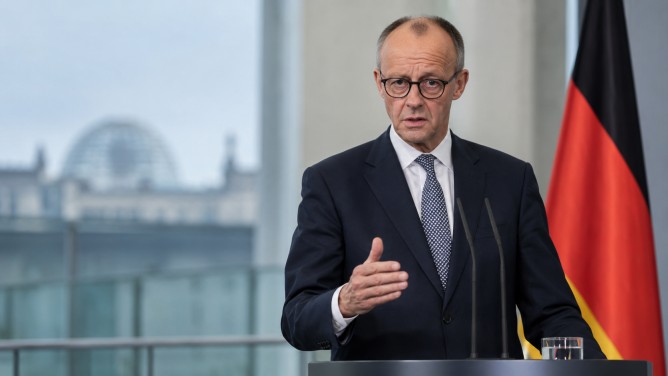
Germany’s Christian Democratic Union (CDU), led by Chancellor Friedrich Merz, faced a significant political setback in regional elections held in Berlin and Mecklenburg-Western Pomerania. The Alternative for Germany (AfD) capitalized on the opportunity, achieving notable gains in both regions.
In Berlin, the leftist Die Linke party emerged victorious with 25.7% of the vote, outpacing the CDU, which secured just 18.8%. The AfD captured third place with 16.3%, underscoring its growing influence in the capital. Meanwhile, in Mecklenburg-Western Pomerania, the AfD pulled ahead in the polls, securing 38.2% of the vote, slightly surpassing the Social Democrats, who garnered 35.5%. The CDU’s performance was particularly poor in this region, earning only 4.9% and failing to meet the 5% threshold required for representation in the state parliament.
The results have intensified scrutiny on Merz’s leadership, especially as they follow another strong showing by the AfD in Saxony-Anhalt earlier this month. Despite these challenges, Merz has expressed his intention to stay in office and continue with his administration’s planned economic and social reforms.
This electoral outcome highlights the growing political fractures within Germany, as the AfD consolidates its support in eastern areas, and Die Linke makes strides in Berlin. The implications of these elections are likely to spark further internal discussions within the CDU regarding its leadership and future political strategy.