The Islamic Republic of Iran was designed, from its earliest days, to be bigger than any individual. The concept of Velayat-e Faqih — guardianship of the Islamic jurist — enshrined clerical authority as a structural principle rather than a personal prerogative. In theory, the system could always replace its leader. Now, for the first time since the republic’s founding, that theory is being tested under the most difficult conditions imaginable.
The constitutional succession process is functioning. A temporary leadership council has been formed, the Assembly of Experts is expected to meet to select a permanent successor, and key institutions continue to operate. Iran’s military has not fragmented. Its security services remain active. The basic machinery of state is intact.
This resilience has deep roots. The Islamic Republic has survived an eight-year war with Iraq in which hundreds of thousands died, a sanctions regime that has lasted nearly five decades, multiple popular uprisings, and constant external pressure from the United States and Israel. Each of these crises was managed, at some cost, and the system continued.
What distinguishes the current moment is the combination of factors converging simultaneously: active war, a leadership vacuum, a nuclear program of uncertain status, a population deeply disillusioned after January’s massacre, and an IRGC whose power may now eclipse that of any future supreme leader. The system is resilient, but it is being tested in ways it has never been tested before.
Analysts caution against both extremes — the assumption that the regime will collapse, and the assumption that it will emerge unchanged. The most likely outcome is a transformed Islamic Republic: one in which clerical authority is subordinated to IRGC power, in which nuclear policy becomes more assertive, and in which the brutal lessons of January have permanently altered the relationship between state and society.
A System Built to Survive: How the Islamic Republic May Outlast Its Founder
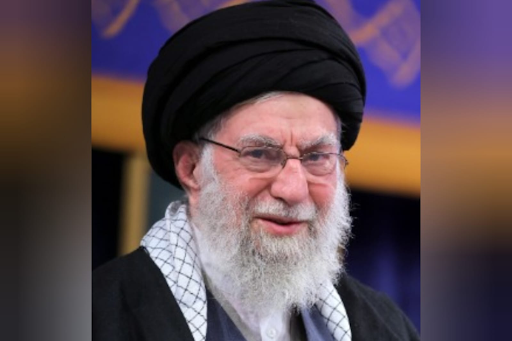
Photo by khamenei.ir, via wikimedia commons
28